Forest or Green Desert? The Risks of Moldova's Black Locust Takeover

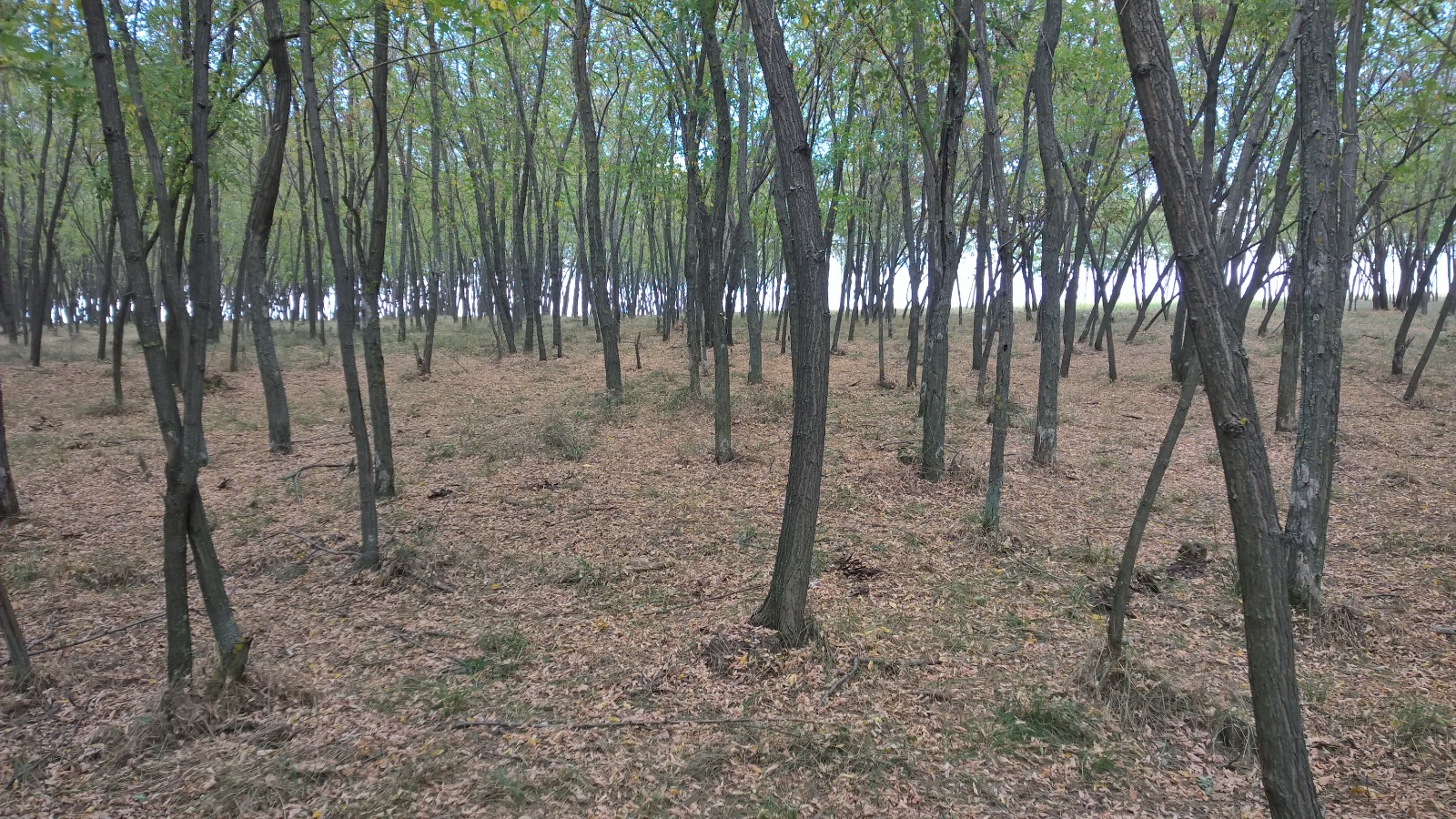
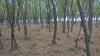
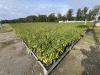
Moldova's National Afforestation Programme is starting to show results, and we can see them on the ground. Straight rows of black locust as far as the eye can see. By our observations, black locust makes up more than 90% of everything that has been planted and taken root. This is not a new problem: back in 2024 I told Ecopresa that 90% of plantings were black locust and that this could not go on. Since then its share has not fallen. If anything, it seems to have grown.
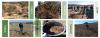
Here is what "success" looks like on the ground. In Colibași, Cahul district, officials boast of 20 hectares planted out of the 36 allocated, while the Southern Directorate of the Moldsilva agency reports 1,094 hectares across the Cahul, Cantemir and Taraclia districts. Take a good look at the trees the people in the video are standing among. It is black locust and nothing else!
None of this happened quietly. Last December, more than 39 environmental organizations and experts sent an open letter to the Presidency, the Government, the Ministry of Environment and the Moldsilva agency. Their demands were simple: strict limits on black locust, at least 70% native species in new plantings, public data on invasive species and independent quality control of afforestation work. The Ministry replied the same day and confirmed a little later that black locust would not exceed 15-20% of the total area. At the end of March 2026, the Ministry of Environment, Moldsilva and the Association of Women Foresters held an international conference on black locust in Chișinău, with experts from Romania, Hungary, Slovakia and Turkey. That is when the authorities announced a "course correction". On paper, the cap is 15-20%. On the ground, sadly, it is a different story.
Let us be fair from the start: black locust is not a "bad" tree. It has its place on gullies, landslides and eroded slopes, where oak and other native species fail to establish. I said as much at the conference: black locust is NOT a problem in itself, but it is not a universal solution either! The trouble begins when a single technical fix becomes the rule instead of remaining the exception.
And it is time we finally admitted it: black locust is an invasive species. It came from North America and is treated as invasive across much of Europe. It does not stay where you planted it. It spreads through root suckers into pastures, forest edges and orchards. Cut down one black locust and a dozen shoots spring up in its place. Anyone who has tried to get rid of it in their garden knows exactly what I mean.
It also spreads by seed, aggressively invading existing forest habitats and crowding out oak, lime, ash...
But the main argument is water. It is the variable we ignore most often. Yet this year we had every chance to see how much water matters! Black locust grows fast because it drinks a lot, and its roots go deep in search of water. We get around 500 mm of rainfall a year on average, and even less in the south. When rainwater falls short, black locust takes the difference from the soil's reserves, year after year. Studies on China's Loess Plateau, a region with rainfall similar to ours, show that black locust plantations dry out the soil during their first 20 years.
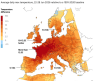
What does this mean for our villages? Wells running dry earlier, springs weakening, land growing ever drier. Exactly what we cannot afford in a country that is already warming and drying out beyond measure.
From a satellite, a black locust plantation looks green. But walk into one in summer. Few birds, few insects, almost nothing of what lives in an oak forest. Black locust also changes the soil: it loads it with nitrogen, and weeds take the place of the forest flora. This is what we call a "green desert": green in the report, poor in life. Not every tree plantation is a forest. And black locust monocultures cannot be called forests at all - they are energy plantations!
Then there is the money. The programme reports in hectares and millions of seedlings, and black locust is cheap, grown in a single season and easy to establish. The numbers look good. But in 20-30 years someone will have to turn these plantations into real forests, and black locust does not go quietly. We will pay three times: once to plant it, a second time to remove it, and a third time to replant the land with suitable species.
What do we propose? Planting forests of native species: oak, lime, ash, white and black poplar, hornbeam, Norway maple, field maple, wild cherry and wild sour cherry... Mixed together, the way a forest grows in nature. Yes, it is harder and more expensive at first. Oak needs good seedlings and several years of care. But we already have solutions, including containerized technology, which the Ministry of Environment itself already treats as a priority. It is just that implementation is badly delayed! What we lack is not science or know-how, but the will to do things well, not just fast.
A forest is not a number of hectares in a report. It is, above all, the ecosystem services we receive every day and on which our very survival on this land depends. It is water in the well, shade for our children and life for those who come after us. We do not want a green desert! The black locust takeover must be stopped!
#NativeForests #Reforestation #ArboretumLive
Related Posts
Planting Forests between Springs
A NEW MINISTER ORDER PROHIBITS FELLING IN THE FORESTS OF THE REPUBLIC OF MOLDOVA!
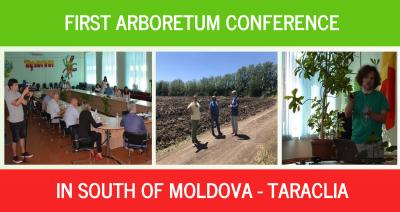
Our first presentation at Taraclia
EU Green Deal capătă Contur