In a country where day after day we argue about elections and scandals, cronies and relatives, one truly important subject barely makes it into the news: the soil beneath our feet, the water in our rivers, and the future of agriculture, without which Moldova simply ceases to exist.
Recently, four scientific studies led by Professor Remus Pravalie (Faculty of Geography, University of Bucharest) were recognized among the top 1% most cited scientific papers in the world, according to Web of Science. These are studies of how drought, erosion, loss of fertility, and other forms of land degradation act at the same time, and how all of this is tied to climate change.
According to assessments by international organizations, including the World Resources Institute, the Republic of Moldova ranks among the countries most vulnerable to climate change and water scarcity. The World Bank classifies Moldova as one of the most climate-vulnerable countries in Europe and warns that water scarcity is already limiting the development of the economy and agriculture. For a country whose economy and very way of life rest largely on the agricultural sector, this is not an abstraction but a question of survival.
Pravalie introduces into the scientific vocabulary the term "multidegradation", when one and the same region is subjected simultaneously to several processes of degradation. Their effect does not simply add up, it amplifies. In his work he shows that we are dealing with a whole chain of processes: drought, erosion, loss of organic carbon, salinization, vegetation degradation, desertification, and others. In a pan-European study, his team analyzes a full dozen such processes across agricultural land in 40 countries, effectively producing a map of the continent's multidegradation. On that map Moldova is no blank spot, we are part of the same crisis, only with a smaller margin of safety.
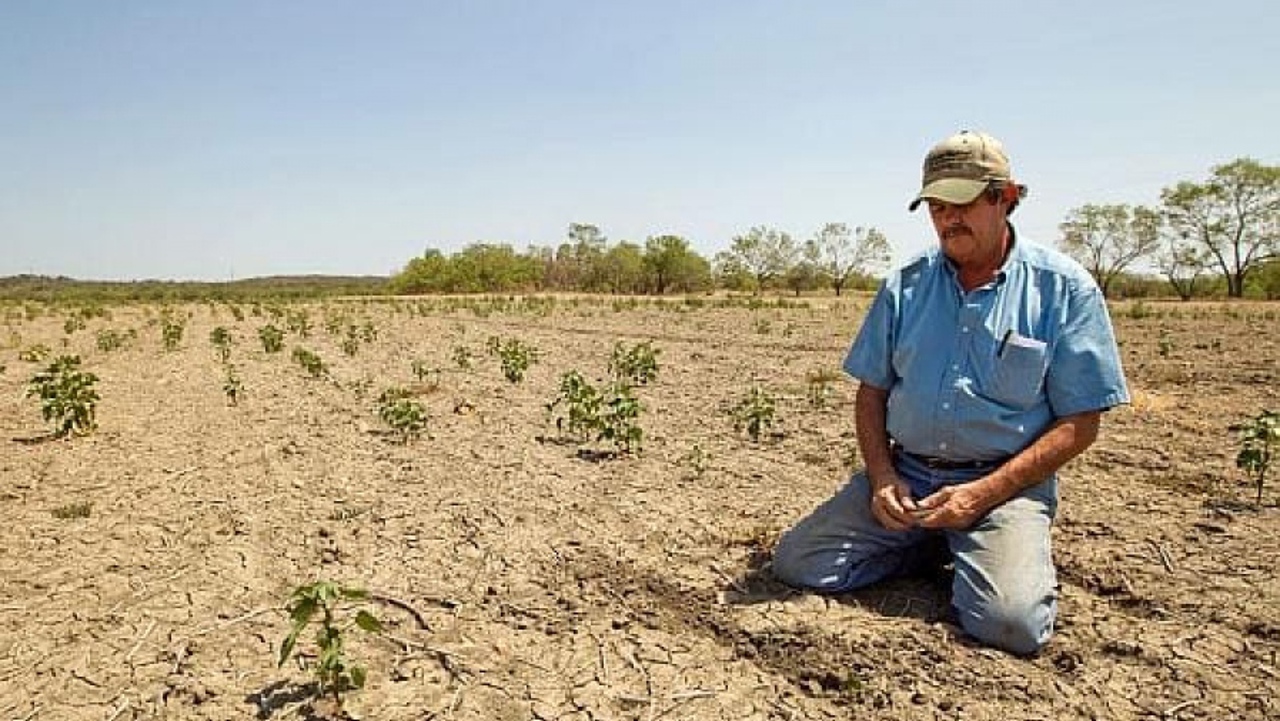
For Moldova, multidegradation is not theory. It is when, in the same village, over ten years the lake dries up, the water vanishes from the wells, after every heavy rain the fertile layer is washed off the fields, and the maize and the sunflower yield only once every three years...
Against this backdrop, our endless games in the political sandbox look like children quarreling over the color of a bucket at the very moment the sandbox itself is being carried away by the flood. We discuss scandal after scandal, instead of discussing whether this country will still have water, fertile soil, and a climate fit for life. Or better still, not discussing it, but getting on with the work.
This is not only about "ecology" in the narrow sense. It is at the same time a question of food security, prices, migration, social stability, and whether Moldova has any horizon of existence at all for the next 10 to 20 years.
In recent years, Romanian scientists and environmental organizations have already sent several memoranda to the president, the parliament, and the government, warning that climate change, soil degradation, and water scarcity are becoming a matter of national security. Replies to these appeals never really came. In Romania, politicians respond to questions of climate, water, forests, and soil degradation almost as deafly as they do here. The difference lies elsewhere: Romania still has a far more solid natural reserve, more water, more forests, more stable ecosystems. Moldova does not have that luxury. What for them looks like a long-term risk, for us is already a direct blow, here and now!
At the very least we can be glad for the Romanian scientists: they do world-class research and describe the storm in which we are all already standing knee-deep. The question for us stays open: will we go on pretending it is "somewhere out there", or will we start treating climate, water, and soils as the main questions of national security?
Given that we can hardly expect sober judgment from the political class, one more direct and honest question remains: what are you personally ready to change or to do so that Moldova does not turn into a country of scorched fields and dried-up wells?