#ghindachallenge 2026 continues: the oaks are resting, but the first volunteers have already brought acorns

This year the pedunculate oak (Quercus robur) in Moldova has produced almost no acorns. Last year we were filling sacks; now we find two acorns at most, barely enough to hold in one palm...
Oaks fruit very unevenly - that is their nature. We had three good years in a row, and this year the oaks are truly resting. But no acorns means our nursery has nothing to sow. And acorns cannot be stored for years, so there is no stocking up.
What makes it especially painful is the timing. For next year we had prepared everything to double the capacity of our nurseries, but, unfortunately, the harvest has failed.
On 20 October we asked for help, and the response exceeded our expectations: hundreds of shares, dozens of comments and messages, reports from all over the country. Thank you to everyone who answered!
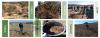
Today we want to highlight one of our long-time followers, an ally and kindred spirit, Sasha Li. Walking near the Plaiul Fagului reserve, he collected about half a bucket of acorns for our nursery. And that is in a place where acorns are very scarce... Inside the forest there are practically none; only a few solitary oaks somewhere on the edge bear fruit.
That is the picture across almost all of Moldova this year. But there are exceptions, and they give us hope. We find them precisely thanks to social media. That makes this experience all the more valuable: it brings us new like-minded people and renews old connections!
The rains are mostly over, and in the coming days it will be easier to get out into the forest. So here is our request: take an extra bag with you. 3, 5, 10 kilograms... We are grateful for every contribution.
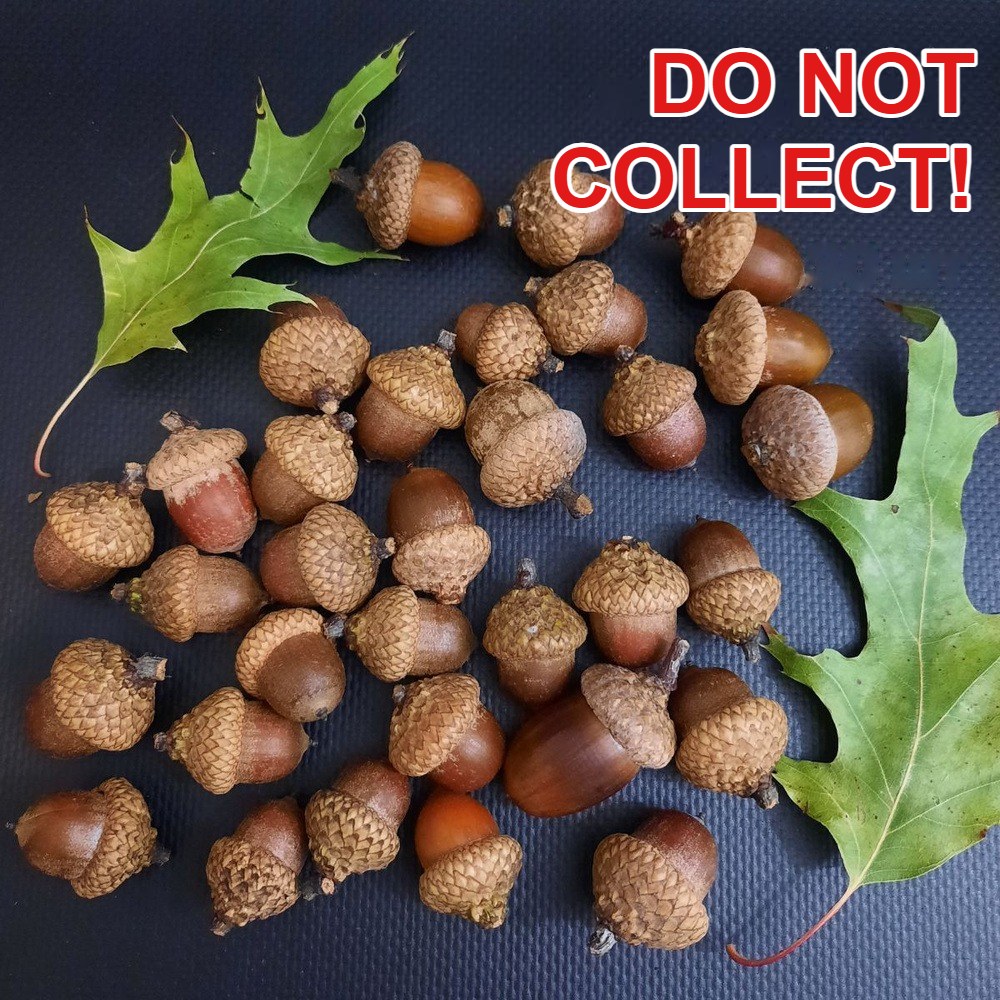
We need acorns of the pedunculate oak (Quercus robur) specifically, like the ones in Sasha's photo. It is our main oak and a key element of Moldova's forest ecosystems. Collect freshly fallen acorns: whole, firm, not sprouted, the kind that come away easily from the cap. If the cap holds on, the acorn is usually infected or already has a pest larva inside. A good acorn sinks in water. You cannot always test it, but it is a good guide. Store acorns in the shade and somewhere cool, in cloth bags.
What we do NOT need are acorns of the red oak (Quercus rubra). It is an introduced species, one could even say invasive... It fruits more reliably, but it does not get along with local microorganisms, insects and wildlife, so we do not propagate it.
And one more thing, perhaps the most important. Oak has very low ecological plasticity. An acorn collected in a floodplain must be planted in a floodplain too, and in the same region. A seedling from a floodplain oak planted on a slope or a hilltop will not survive in the long run. Such an oak can suddenly dry out 5-10 years after planting, even after developing perfectly normally. Likewise, seedlings grown from acorns collected in the north cannot be planted in the south of Moldova. A very careful ecological match is needed. That is why it is so important to grow and plant in Moldova seedlings from Moldovan acorns, and not to change the ecological conditions and regions of origin of the genetics. For the same reason, when you bring us acorns, tell us where they come from: village, district, floodplain or slope. Better still, record the exact geolocation - simply turn on location in your camera settings.
If you know an oak that has acorns this year, tell us where it is: village, district, a photo, a pin on the map. Best of all in the comments - we check every one. Ideally, of course, collect them yourself.
Thanks again to Sasha and to everyone who responded, who has already collected or is still planning to. Shares still help. We are counting on you!
For those who want to dig deeper, we recommend the BBC documentary "Oak Tree: Nature's Greatest Survivor". It follows one year in the life of a 400-year-old oak and all the processes taking place inside it. After it, you never look at an oak the same way again.
#ghindachallenge
Related Posts

More than 100 new trees were planted at the National Botanical Garden of Moldova [VIDEO]
HONEY CONVEYOR - BUILD YOUR OWN

Arde Planeta... Ce putem face?

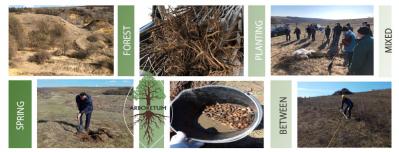
Planting Forests between Springs