Lithuania: from over 50 nurseries to 11 and 50 million seedlings a year [PHOTO]

![Lithuania: from over 50 nurseries to 11 and 50 million seedlings a year [PHOTO]](https://arboretum.live/pub/media/mageplaza/blog/post/l/i/lituania_cover.jpg)
After Sweden, the second country of our study visit on containerized technology was Lithuania. We saw three sites of the State Forest Service, several planted areas, and something that impressed us perhaps even more than the machinery: a country modernizing its forestry without cutting its roots.
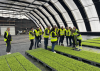
Our first stop was the Panevėžys nursery. Of more than 50 state nurseries, it was the first to start the switch to containerized production. The results were so convincing that the whole sector followed. What you see here today is 8 years of continuous investment, and it is not slowing down: new machinery keeps arriving, the area keeps growing, and so do the plans. Panevėžys alone grows around 15 million seedlings a year.
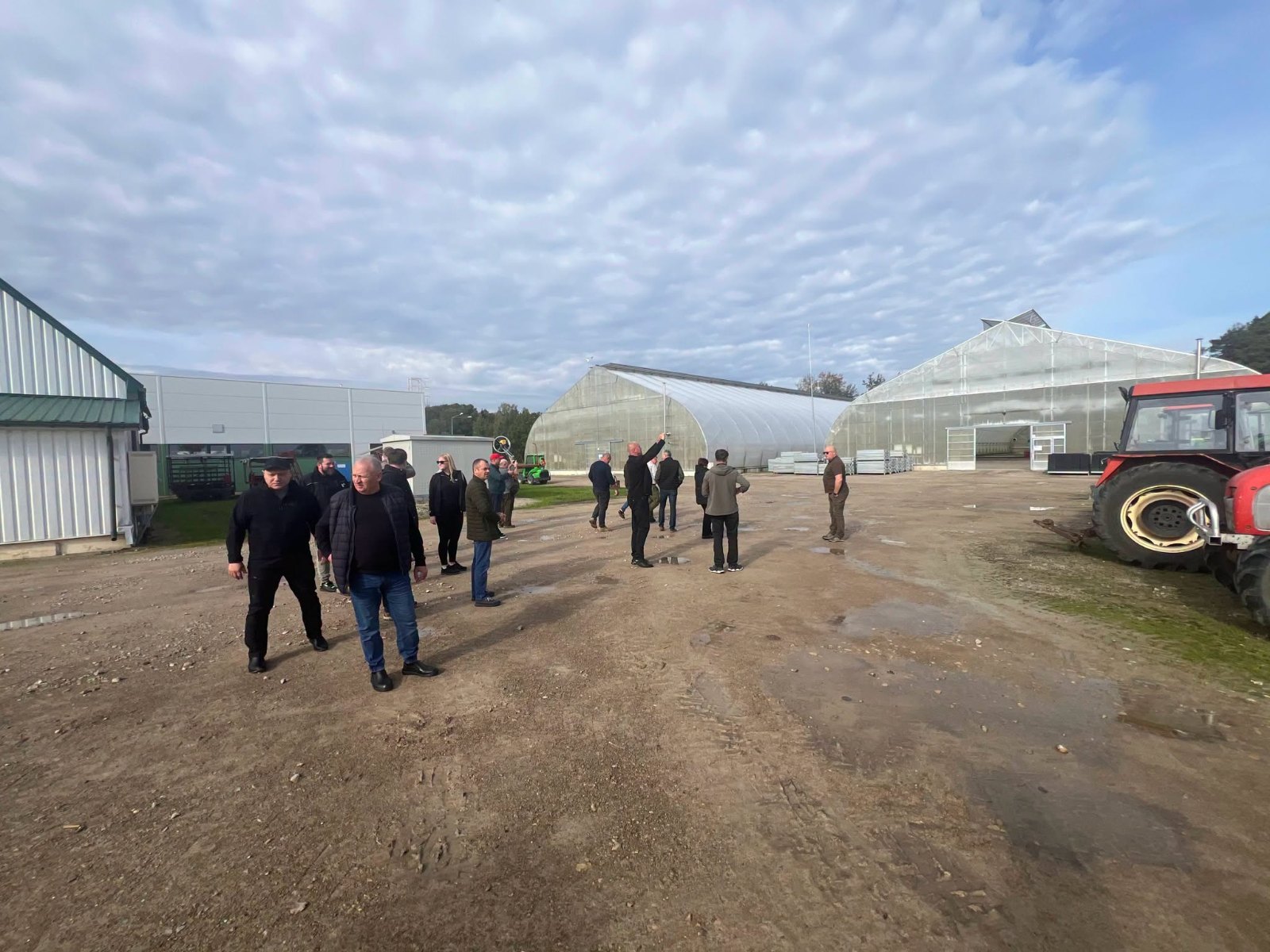
Consolidation changed the entire sector. The number of state nurseries fell from over 50 to 11, with staff reduced proportionally. Meanwhile, the volume and quality of planting stock rose significantly. Today the sector produces more than 50 million seedlings a year, and 20% goes for export, along with tonnes of improved seed.
Mass production led our Lithuanian colleagues to an inevitable conclusion: if you produce at scale, you have to produce the highest quality. Otherwise you cannot compete internationally, and Lithuania wants to grow its export share. Local forest districts, too, are far happier working with improved seedlings - the difference in the field is visible to the naked eye.
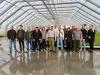
That brought us to the second site: a recently established genetics centre, part of a network of research stations and experimental orchards. Here the most productive forms of each species are selected through controlled crossing, flower induction, dedicated seed orchards, ongoing multi-trait genetic analysis, grafting and rootstock selection for a vigorous root system. Research is funded by grants and projects, but also from the own revenue of the planting stock business, which is already financially self-sufficient. Investment continues here too: a new industrial greenhouse for research is under construction right now - the photos show the concrete posts being poured.
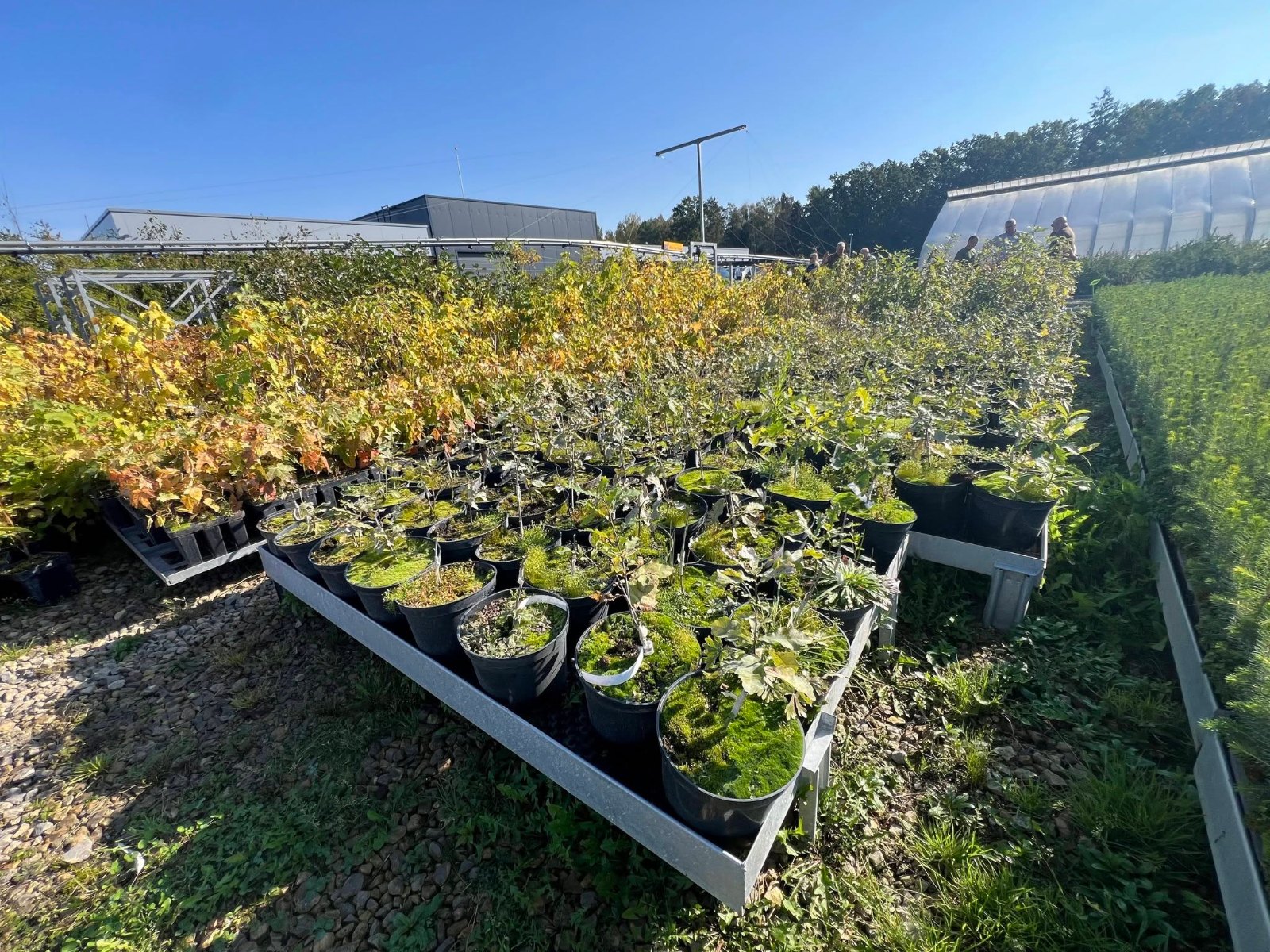
The third site was the nursery in Kaunas. It also belongs to the Lithuanian State Forest Service but was built on the lessons of Panevėžys. It hosts a seed centre covering both conifers and broadleaves, including fruit-bearing forest species: wild pear, wild apple and berry shrubs. These are gaining importance in ecological restoration and protected area management, where they are planted as a priority to support biodiversity.
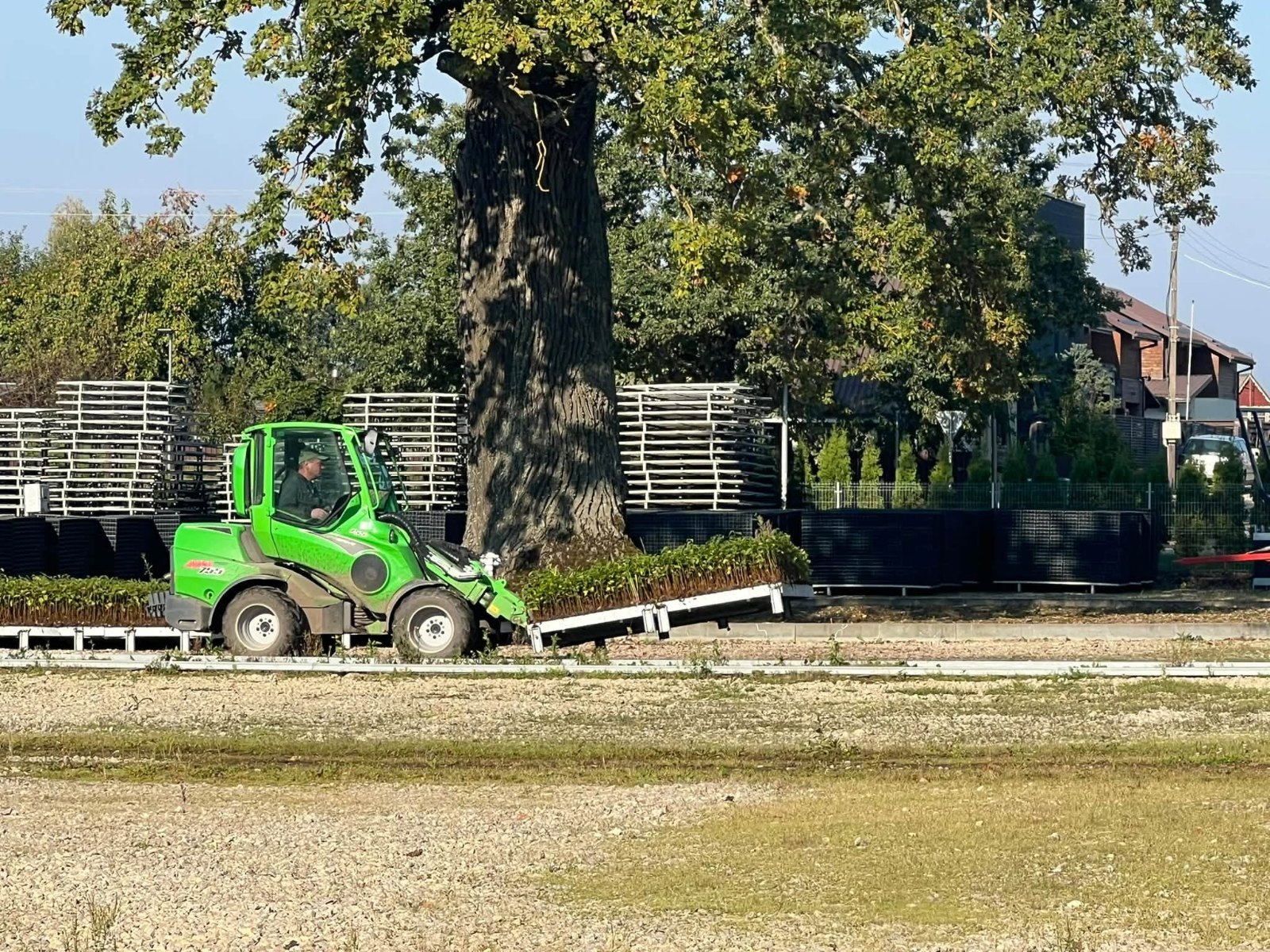
The new nursery was built on an existing site with centuries-old oaks and Soviet-era seed infrastructure. Both the trees and part of the old equipment were kept and are still maintained in working order, even though the new generation is far better in productivity, quality and energy efficiency. Respect for nature, for history and for the work of previous generations is probably one of the pillars of the revival of the forest industry in the Baltic states. And Lithuania is not stopping there: two entirely new nurseries are being built at the same time, set to take production technology to the next level.
By the way, a kilogram of high-quality conifer seed can cost several thousand euros, depending on breeding, genetics and other factors. Quality forest seed is in high demand internationally, and the producer usually sets the price - an additional source of income for foresters.
We spent the last part of the programme in the field, on sites planted with containerized stock. On the way, we briefly stopped at a European bison breeding centre, part of the pan-European network that brought the bison back to the wild after the species had disappeared completely from nature early last century. In Lithuania, the bison's return began in 1969. Today the centre holds more than 70 animals, and according to our hosts more than 700 roam free across the country.
Lithuania did not simply copy a technology. It built a national system in which nurseries, seed sources, research, genetics and field planting work as a single mechanism - one that largely pays for itself and earns export revenue. For Moldova, this may be the most important lesson so far.
The study visit is carried out under partnership agreements between NGO LuRenOm, the "Moldsilva" Agency and ICAS - the Forest Research and Management Institute, in cooperation with the State Forest Services of Sweden and Lithuania, and is facilitated by the ARBORETUM.LIVE platform (Follow-the-root). We are grateful to our Lithuanian hosts for their unprecedented openness - we landed on them in the middle of the season - and for sharing the finest details of their processes and technology.
Stay tuned. Follow the whole journey under #TehnologieContainerizata
Related Posts
![More than 100 new trees were planted at the National Botanical Garden of Moldova [VIDEO]](https://arboretum.live/pub/media/mageplaza/blog/post/resize/400x/v/i/video-sreenshot_2.png)
More than 100 new trees were planted at the National Botanical Garden of Moldova [VIDEO]
Новая экологическая программа в Ниспорень. Партнерство с мэрией Вэрзэрешть.
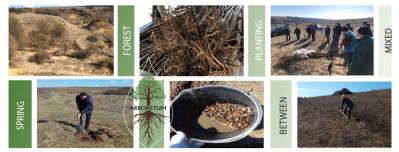
Planting Forests between Springs