The MIGRA-TREE network already has 43 specialists from 20+ countries. Now it needs practitioners

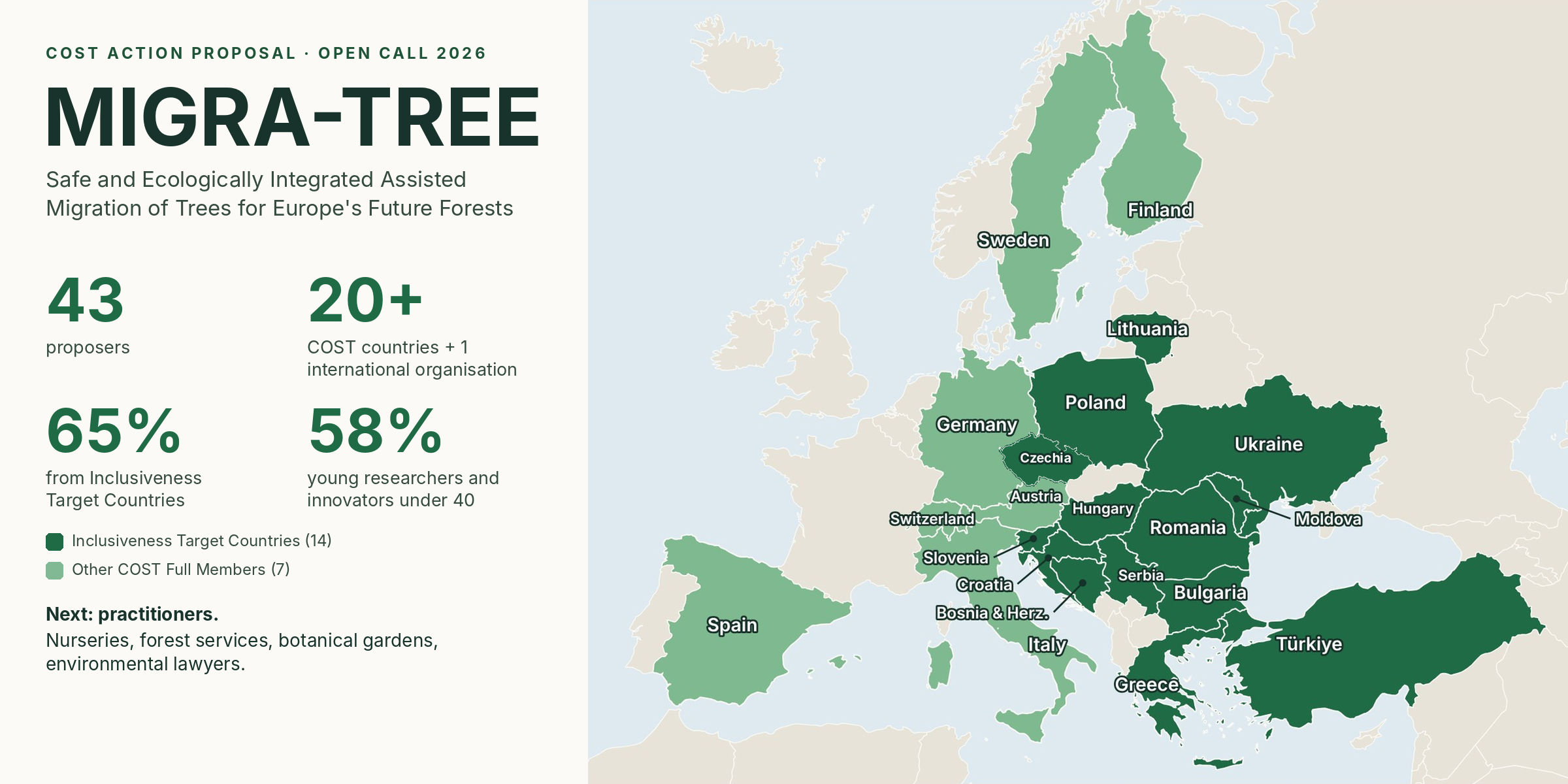
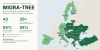
In just over a week, 43 researchers and experts from 20+ COST countries and one international organisation have come together around a single question: how can we help Europe's forests keep pace with climate change without harming ecosystems along the way? That is how MIGRA-TREE was born - "Safe and Ecologically Integrated Assisted Migration of Trees for Europe's Future Forests", a COST Action proposal for the 2026 Open Call. Our organisation is one of its participants.
What is COST. COST (European Cooperation in Science and Technology) is a European programme that funds the work of a network rather than research itself: meetings and workshops, training schools, short scientific visits between countries, conference attendance, communication and dissemination of results. An Action runs for four years and exists so that specialists from different countries work on a shared problem together, not in parallel. This is why practitioners matter in such a network, not only researchers.
The numbers already look good: 65% of the participants come from countries that COST specifically supports, 58% are young researchers under 40, and the gender balance is nearly even.
The network also has a weak spot: for now, it is too academic. Three quarters of the participants (32 of 43) represent universities and research institutes. But assisted migration is not decided in journal articles alone. It is decided in nurseries, forest districts and botanical gardens, on trial plots and in the laws on forest reproductive material. Without the people who plant, grow, protect and regulate, this network will remain a conversation among scientists.
That is why the network is still looking for practitioners: nursery growers, foresters and forest administrations, botanical gardens and arboreta, seed and provenance specialists, environmental lawyers. We particularly need colleagues from Slovakia, Albania, France, Montenegro, North Macedonia, Georgia and Armenia. If you know such people, especially young researchers, please forward this post to them.
How to join? Until 25 October you can enter the consortium as a proposer. If the proposal is approved, the network will be open to everyone interested in the topic: working groups, data sharing, trial sites, joint publications. You do not need to be a proposer for that.
Special thanks to Iulia Iațco for supporting our first steps in this programme. Keep in touch!
Related Posts
Planting Forests between Springs
Our first presentation at Taraclia

Chyorna-Chernitsa - new working basin for Arboretum

Synthesis of Accumulated Ideas and Proposals