
Future-Proofing Beekeeping: Insights from the MoldApis Conference

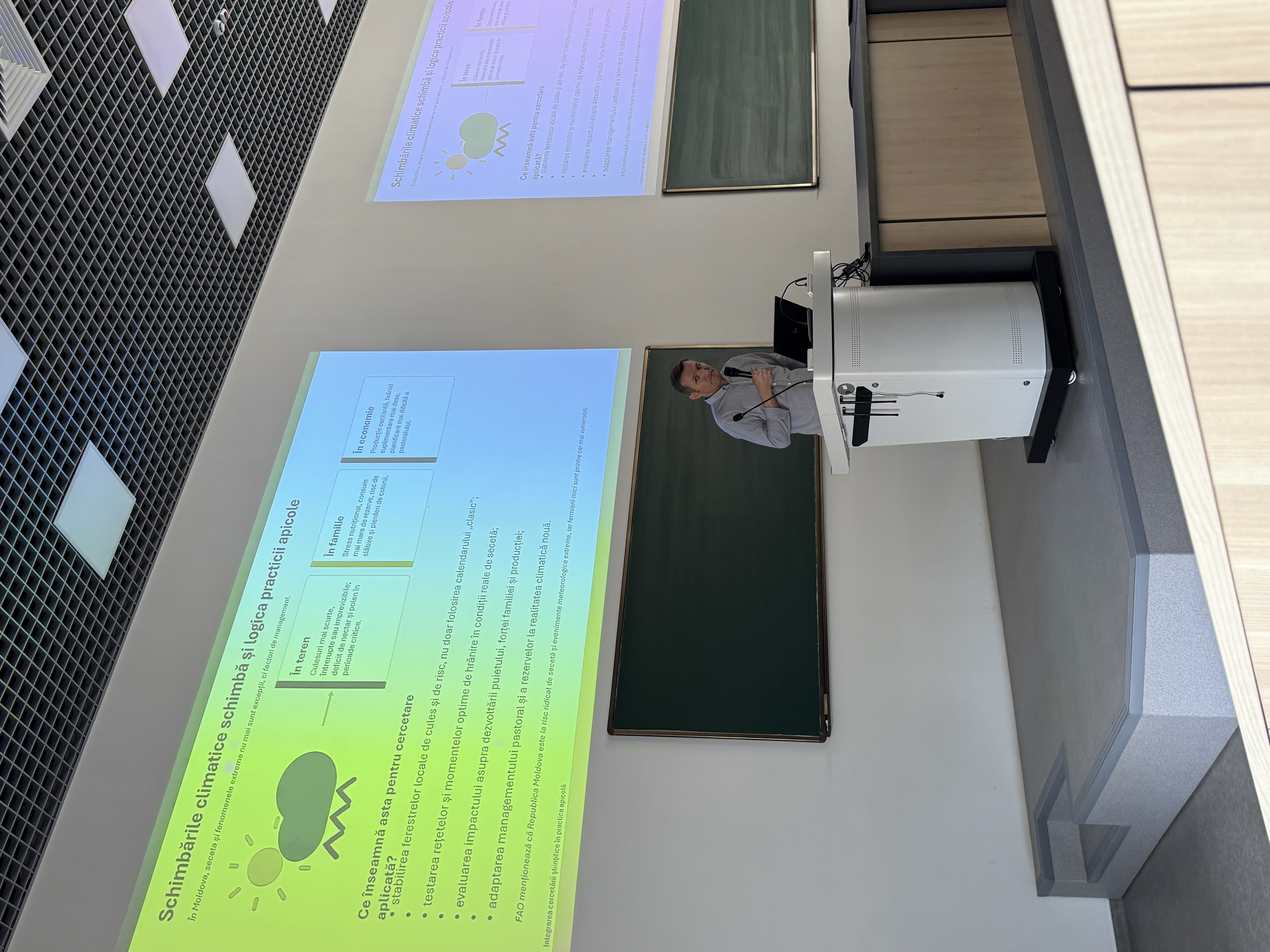
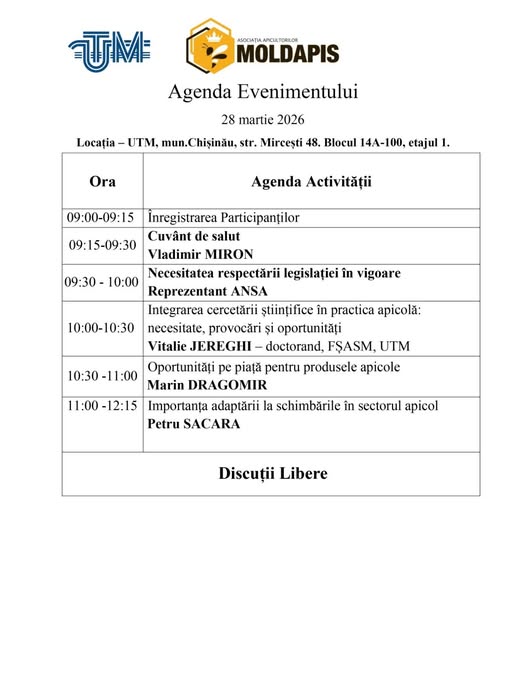
Today, we had the honor of participating in the MoldApis Beekeepers Association conference, held at the UTM campus on Mircești Street.
I was deeply impressed by the turnout, especially considering we are in the peak spring season when every day in the field is critical for a beekeeper’s success.
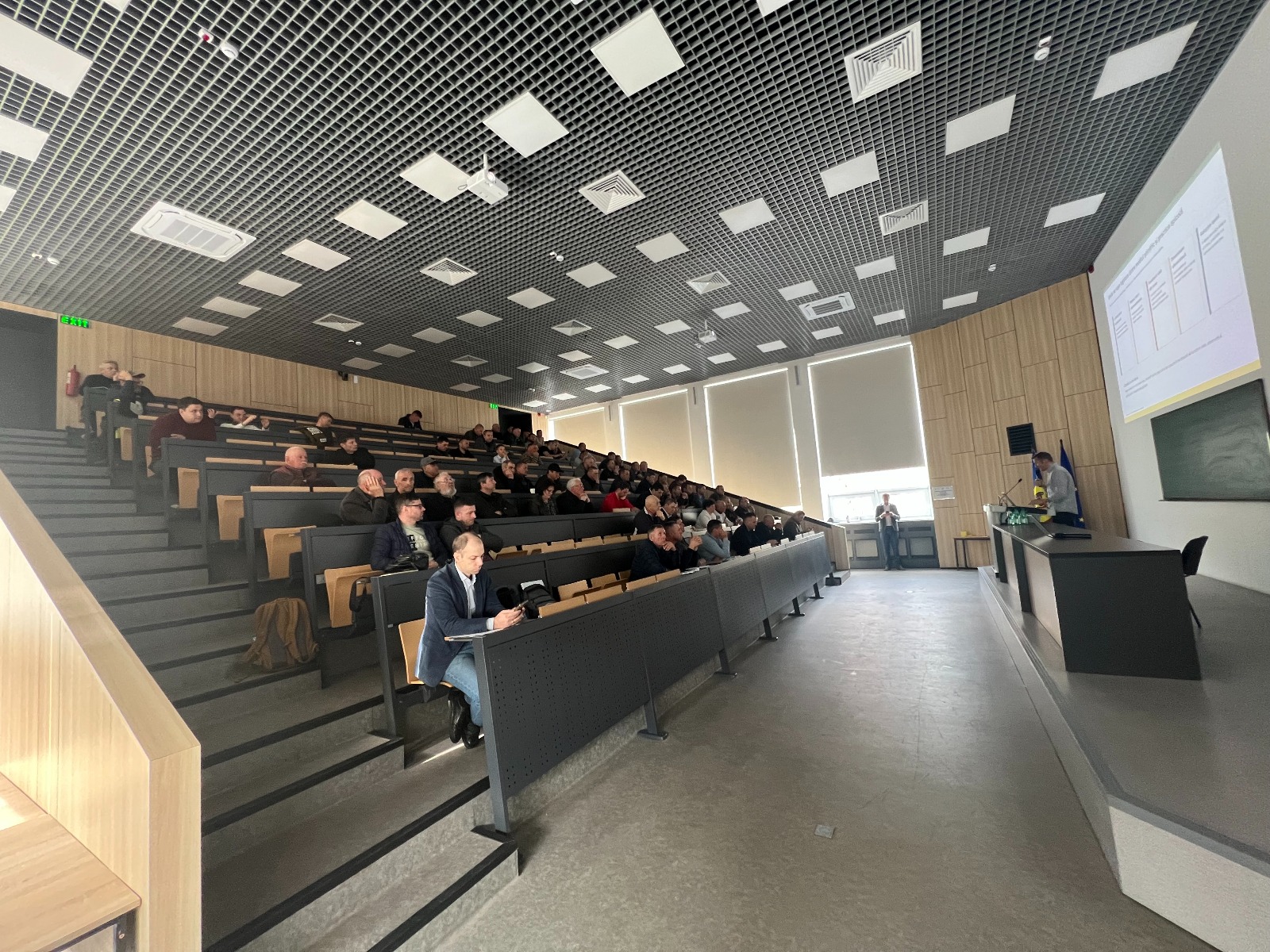
Beekeepers are truly a special breed of people—admirable and resilient. In recent years, climate change has made it increasingly difficult to achieve peak performance in Moldovan apiculture. Yet, these individuals demonstrate a remarkable capacity for adaptation and the ability to navigate unpredictable challenges, providing a lesson in resilience for us all.
The conference agenda focused heavily on the necessity of association, collective action, and cost reduction through cooperation. Numerous international models were presented—functional systems and concrete solutions for challenges such as shifting honey-flora structures, pest migration, and extreme weather patterns.
In my intervention, I focused on the opportunities for developing a sustainable honey base. Climate change is not just a problem; it can be viewed as an opportunity to introduce new species and significantly enhance local ecosystems for bees.
I presented several species, including late-flowering varieties (July–August) that we have been testing for years: the Japanese Pagoda Tree (Styphnolobium japonicum), the Bee Bee Tree (Tetradium daniellii), Tamarix (Tamarix spp.), and the Japanese Quince (Chaenomeles japonica). These species can bridge critical gaps in the nectar flow, stabilize honey production, and provide diverse raw materials for high-value apiary products.
Another key objective was to open a dialogue on concrete mechanisms to stimulate honey-base development at the local level:
— Coordinated community plantings
— Local government (Mayoralty) involvement
— Development of high-value forest plantations
These can be achieved through the National Program for Forest Extension and Rehabilitation, as well as support schemes via AIPA, ODA, and other available funding mechanisms.
The informal discussions during the break were equally valuable. Several beekeepers shared success stories regarding the saplings they purchased from our nursery. For instance, some reported that their Bee Bee Trees (Evodia) have already bloomed, even if mine haven't yet. It’s like people—one gets "married" at 18, another at 40!
A standout example: A beekeeper from Călărași district worked with his local mayoralty to plant approximately 400 honey-bearing trees. The local authority provided the land and community outreach, while the villagers took over the care and protection of the trees near their homes. After all, a bee doesn't check the land registry—it only cares about the flower and the nectar. These win-win-win models must be popularized further.
Overall, I am heartened to see Moldovan beekeepers turning toward science, selection, and international collaboration. This evolution is essential for taking the industry to the next level.
Practical Notice:
The bare-root planting season is coming to an end. We still have a few dozen specimens of Sophora Japonica available in our nursery:
— 2-year-old saplings (up to 1.5 m)
— 4–5-year-old specimens (3–4 m tall)
Evodia danielii is currently out of stock, but we are opening pre-orders for the 2026 season with a 50% discount.
The contract is signed now with a 50% advance payment, and the balance is due upon delivery in the fall.
For more details, visit our ad on 999.md or contact Mrs. Claudia at 069030200.